Your station's app is published, the console says everything is fine, and a listener types the exact name into the store and gets nothing. Most of the time the search algorithm is not to blame. It's a filter the store applies, with written rules, that someone at the station switched on without noticing or stopped complying with.
That's where I would start, before spending an afternoon rewriting the description. Ranking explains the app showing up fifth. It doesn't explain the app vanishing on one phone and showing up on another.
First: does the direct link open?
In Play Console, select the app and click View on Google Play, under its name. The Play Console Help Center tells you to do exactly that to confirm the listing exists. It also reminds you that only an app released on the production track is available and searchable. An internal or closed test is invisible to the public, even if the whole staff already listens to the station through it.
On the Apple side, the status in App Store Connect tells the story. Three entries on Apple's status list trip people up. "Pending Developer Release" means the app was approved and is waiting for you to release it. "Processing for Distribution" means it will be ready within 24 hours. And "Ready for Distribution" still requires your agreements to be in effect, and the person who accepts new agreements is the Account Holder, the owner of the account.
Why the app disappears on some Android phones
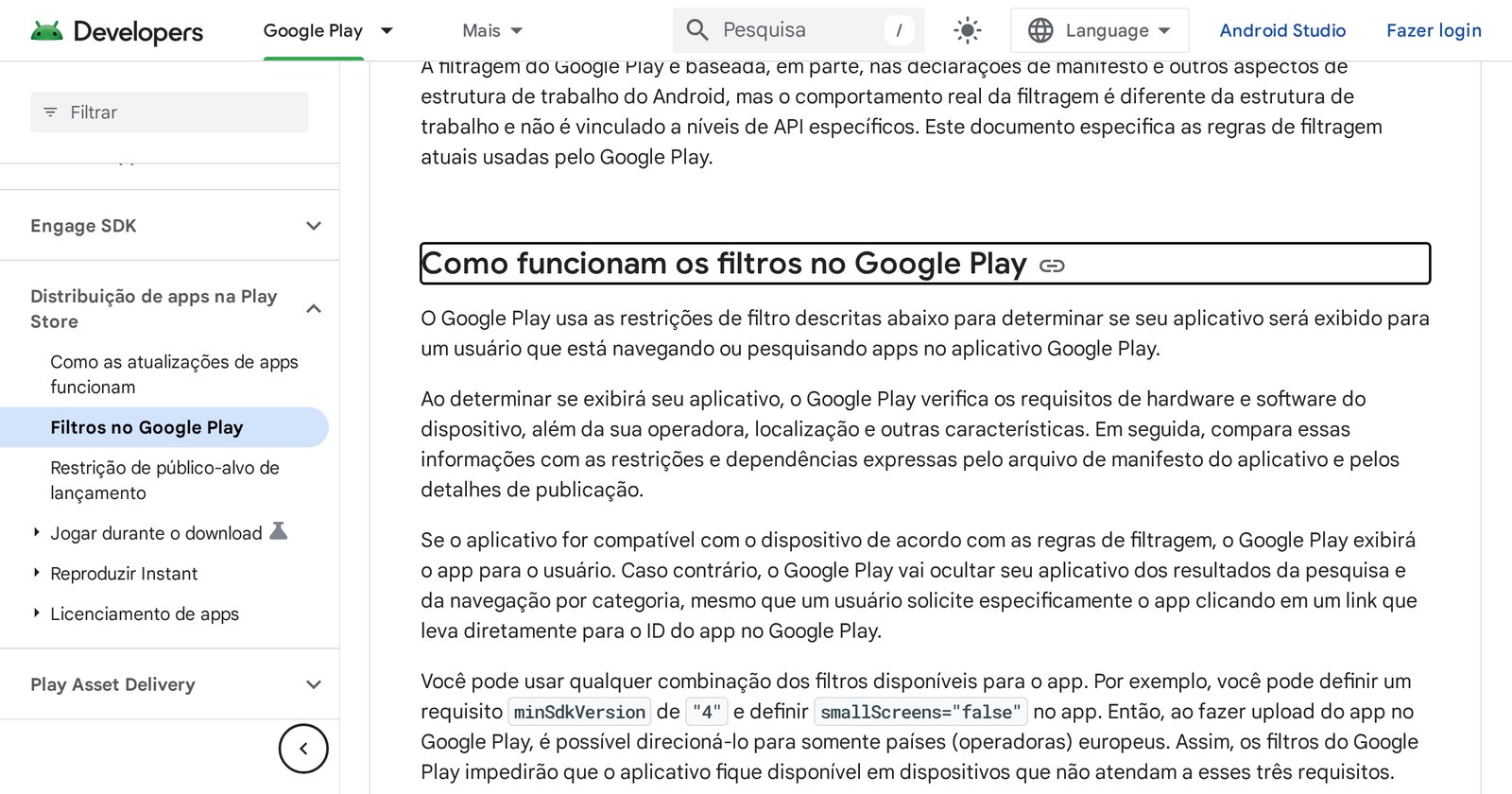
Google Play compares the listener's device with what the app declares (Android version, screen, features, country) and, if they don't match, hides it. The Android filters documentation is blunt: Play removes the app from search results and category browsing even when the person clicks a link that points straight to it. You post the link on the station's social pages, the listener taps it, and the store says it isn't there.
The filter that matters most right now is the target API level, the target SDK. The Google Play rule says an existing app must target Android 15 (API level 35) to stay available to new users on devices running a newer Android version than its target. People who already installed it keep listening. Someone who just bought a new phone and searches for the station won't find it. Google offered an extension until November 1, 2026, and that date has passed.
That explains the complaint "it installs on my old Android but not on the new one": the app is stuck on a target the store no longer serves to the new phone.
The same filters page warns that if an update makes the app invisible to a device, the owner of that device won't see that an update exists either. The station ships the fix and part of the audience never gets it.
The store country matters on both sides
On the App Store, availability is set country by country, across 175 countries and regions. And the store a listener sees is decided by the country of their Apple Account, not where they happen to be. A station with listeners abroad that enabled only its home country has lost those listeners in search. Availability changes take effect immediately, but Apple warns they may take up to 24 hours to be visible to everyone.
On Google Play, the same help page says search results vary by device, location, carrier and compatibility. Two listeners side by side with different phones can see different lists. Before concluding the app is gone, test on more than one device.
The app really did leave the store
Sometimes it isn't a filter, it's a removal. Apple runs an ongoing App Store cleanup: an app that hasn't been updated in three years and falls below a download threshold gets a notice and has 90 days to submit a new version. If it doesn't, it's removed until an update is approved. An app that crashes on launch is removed immediately, no grace period.
The good news, on that same page, is that the name stays yours, nobody can take it, and people who already installed the app keep using it normally. You can come back as long as your developer membership is active. If the membership lapsed, that's a different problem, and we covered it in the post on publishing a radio app on Google Play and the App Store.
A station app that works and nobody has touched in years is exactly the profile this process catches. "If it works, don't touch it" is great advice for a transmitter and terrible advice for an app.
When it really is search: the name listeners type
Once you're past the filters, ranking comes in. Both stores say where search pulls text from. On Google Play: title, description and developer name. On Apple: name, subtitle, keywords and primary category, plus downloads and ratings.
Space is tight. The app name gets 30 characters on Google Play and 30 on the App Store, where you also get a 30-character subtitle. I'd spend that space on the name listeners actually say, the frequency and the city. "Radio" on its own, a slogan or "Official" burn characters and bring nobody in.
On Apple, the keyword field has 100 characters, separated by commas with no space after them. Apple itself asks you not to repeat words already in the name, subtitle or category, and says promotional text doesn't count for search. Use keywords for what didn't fit: the station's old name, its call letters or nickname, the neighboring town your signal reaches, your best-known show. Competing app names and unauthorized trademarks are banned on the same page, which calls keyword misuse a common reason for rejection.
What I would check today
- In Play Console, the target SDK of the bundle on the production track. Below level 35, that's what hides the app from new phones.
- In App Store Connect, the version status and whether an agreement is waiting for the Account Holder.
- The list of enabled countries on Apple, with listeners abroad in mind.
- The direct store link, opened on two different phones and off the station's Wi-Fi.
- The date of the app's last update on Apple. If it's past two years, schedule the next one now.
If keeping target SDK, agreements and new versions up to date isn't work your station wants to carry, the AppRadio station app ships for phone, tablet, TV, CarPlay and Alexa. Store rules still apply to everyone, and the developer account is still the station's business.