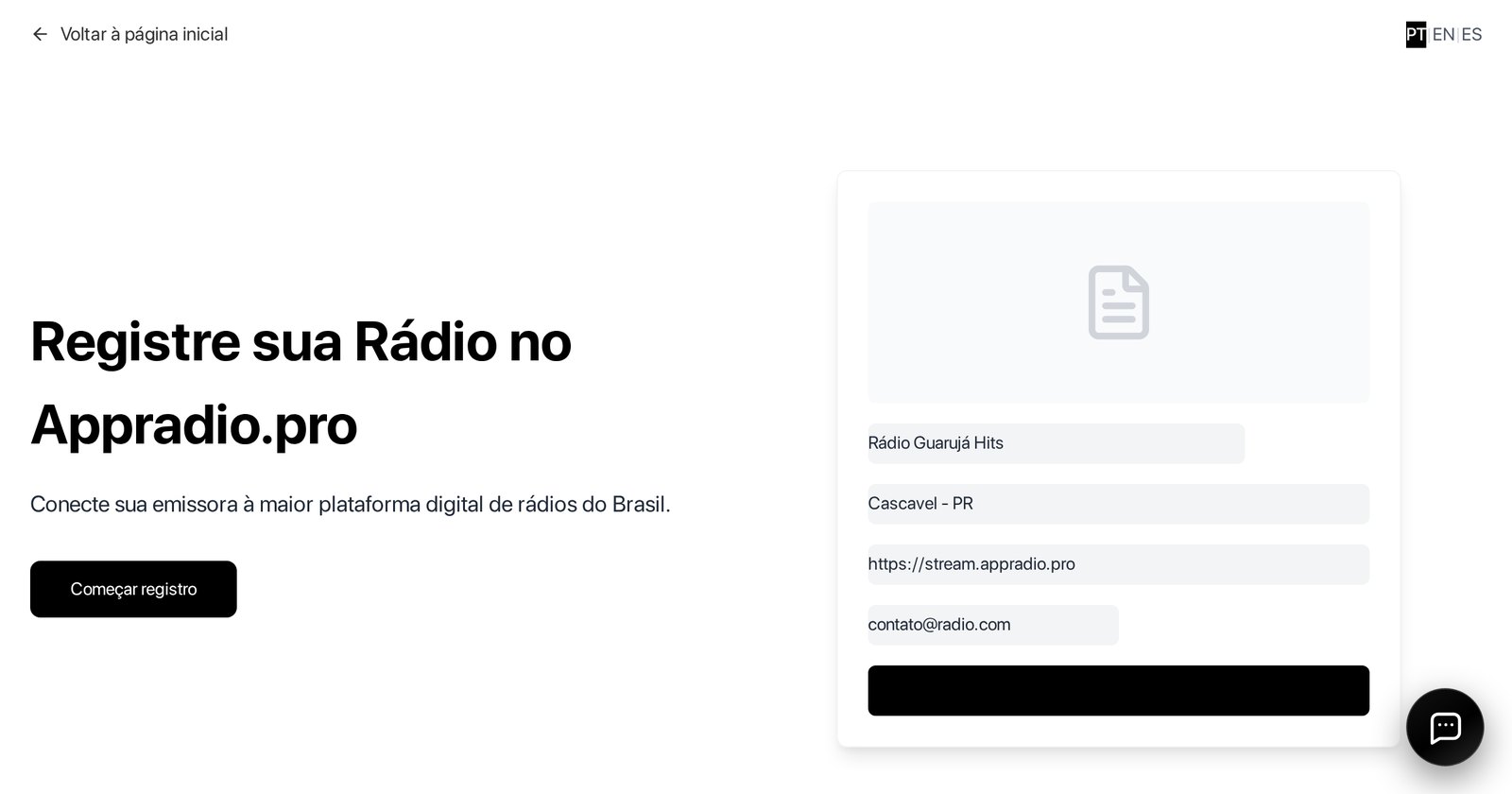
The listener opens an app, types your station name and gets nothing. Or they get a stale card: stretched logo, the wrong city, a Play button that never starts. Most of the time that is not ranking. It is what you sent in the listing.
I think stations vanish in apps because the name, the city, the logo and the stream URL are not what the listener actually uses. A catalog shows what the station filed. People who disagree usually blame the algorithm, or assume you only get in if you pay for a featured slot. Some catalogs do sell placement. That still does not explain a station disappearing when someone types the exact name.
Getting a radio station on apps, here, means landing in a catalog the listener already has on the phone. Shipping your own station app in the stores is a different job, and what hides that app from search was the previous post.
The name and city people actually say
On the AppRadio.pro registration form the station name is required, along with city, country and website. Listeners do not search the legal entity. They search what they hear on air and what a friend forwards on WhatsApp.
If you are "87.9 Serra FM" on the air and "Serra Azul Broadcasting Ltd" in the form, the app has nothing to match. Frequency and city in the name help when someone remembers the dial and forgets the brand.
City is not a footnote. The form itself says that if it cannot find a license tied to the city you entered, the station is added as web radio, with no FM frequency. Studio in one town, license in another: you type the studio city, lose the dial number, and the listener looking for "87.9" scrolls past.
You get at most three genres. Conflicting ones (gospel and funk, news and all-hits) can land as "Eclectic". "News" on that form is reserved for AM/FM stations whose schedule is almost entirely news. Ticking news because you run a five-minute bulletin at breakfast puts you in the wrong filter.
A logo that still reads on a phone
The form wants JPG or PNG and recommends a square: 250×250, 300×300 or 512×512, 5 MB at most. That is not a designer whim. In the app your station is a little square in a list. A billboard banner, a studio photo with people in the corner, a transparent PNG on a white store background: nobody reads the name.
I would crop the logo to a square before uploading, with the mark filling most of the frame and no thin slogan. If the station has two brands (the old one and the new one), the icon is the one listeners recognize today. The other name belongs in the description.
A stream that plays off the station LAN
The streaming field wants the main URL. The examples are an IP with a port and an HLS playlist. There is a specific warning: for older devices, also send an HTTP link, starting with HTTP, not HTTPS.
Anyone who read the Alexa Radio Skills Kit post knows Amazon asks for the opposite, HTTPS on port 443. Both URLs can exist. The old phone in the kitchen and the smart speaker in the living room are not the same device.
The test that matters is not the player on the studio PC. It is a phone on cellular data, away from the station Wi-Fi, tapping Play on the listing. If it only works on the internal network, the listener's app stays silent. Icecast's docs on the YP directory are blunt: the listenurl must work on the public internet. A hostname set to localhost is one of the misconfigurations they list. The source client also has to send Ice-Public: 1 if you want that directory to take the stream. One wrong setting and the listing never goes in.
On AppRadio, a web station whose stream is down for more than 48 hours without an explanation can have the transmission turned off. A pretty listing with a dead encoder still vanishes.
What the catalog refuses on purpose
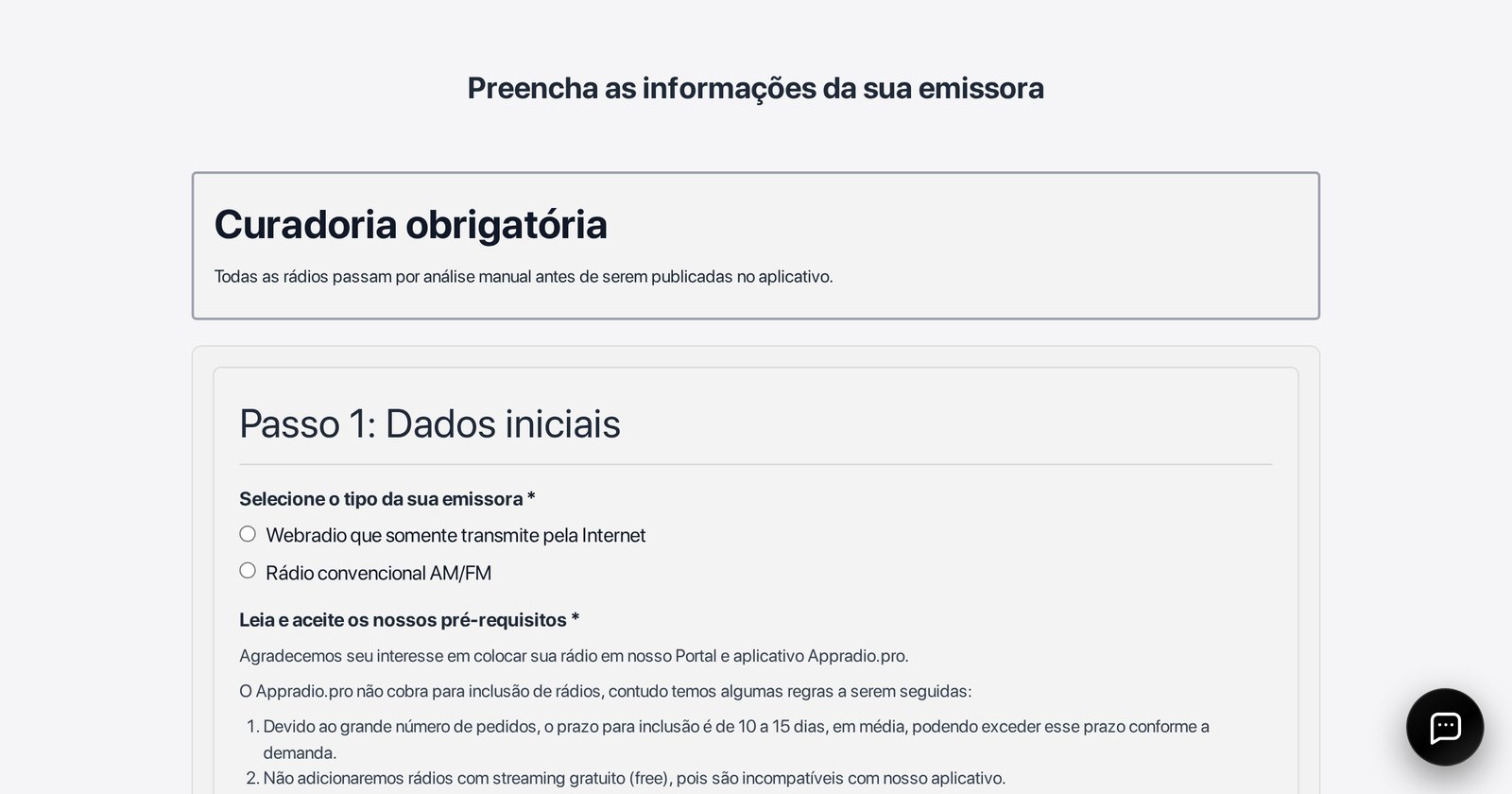
Every station goes through a manual review before it is published in the app. The form says 10 to 15 days on average, and it can run longer. Inclusion is not billed. It is also not automatic.
The prerequisites refuse free streaming, because it will not run in the app. They refuse adult content and sexually explicit songs. They refuse candidate names and campaign references, because of the law. A well-known brand name only gets in if there is no trademark conflict.
None of that is "the algorithm hid you". It is a door policy. Stations on a free encoder that injects third-party ads may still see a player warning that the stream may contain audio ads: the form says so.
Updates after you are live have an owner too. The registration email is what the team will ask for on any logo, stream or phone change. The personal inbox of a contractor who already left is a problem that only shows up the day the stream moves servers.
The same kind of card, with logo, title and description, is what TuneIn asks broadcasters to manage in its portal. Stations outside the United States join that directory through the self-service form. It is not the same catalog. It is the same logic: the station disappears when the card is wrong, in any app.
A lunch-break test
Open the app on a phone, off the station Wi-Fi. Search the name listeners say, not the one on the corporate papers. If that fails, search the frequency and the city. If you find the card, tap Play.
If Play fails, the listing is lying about the stream. If you find another station with a similar name, the on-air name and the listing name are not the same. If you find yourself with an unreadable logo, the 512-pixel square still has not been sent.
Fix what failed, keep the registration email with more than one person in the building, and only then argue about ranking.